Foundation Repair in Crowley, TX
What moves slabs on this side of Fort Worth, what fixing it usually costs, and how to tell which cracks matter.
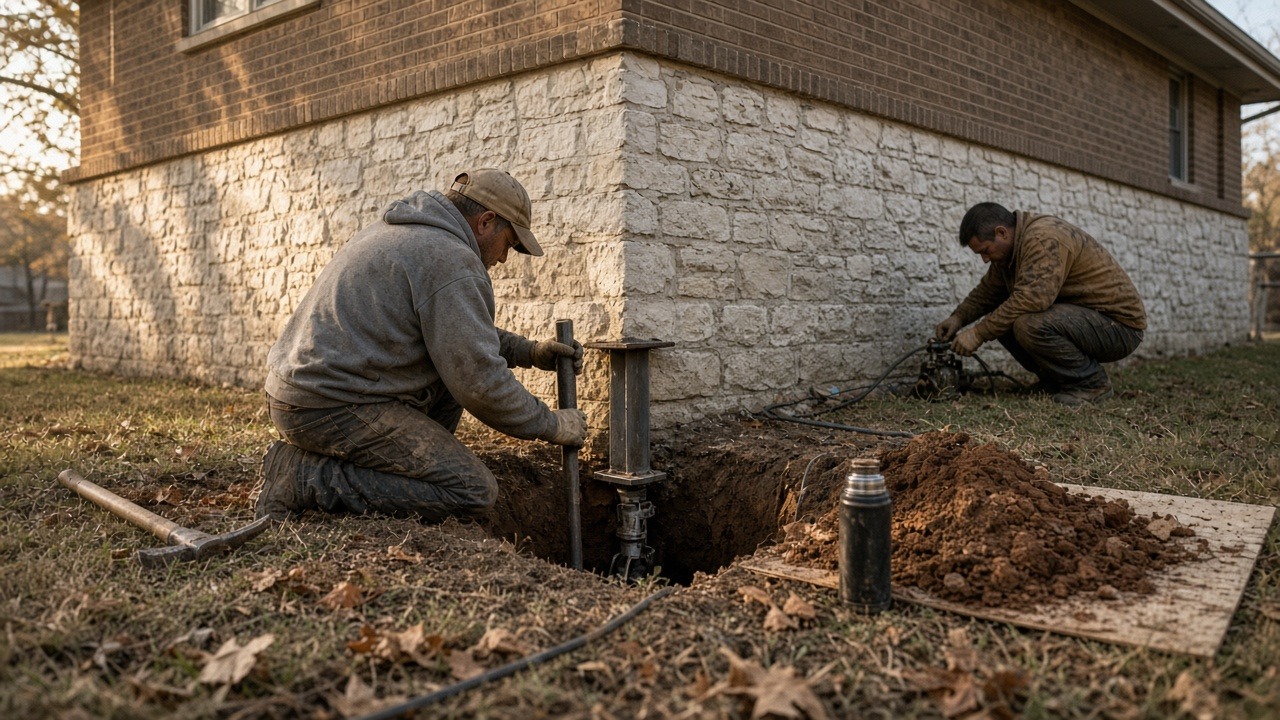
Foundation Repair in Crowley, TX starts with a soil map most homeowners never see. USDA soil surveys put Lindale, Sanger, Aledo, Ponder and Slidell soils under the city, and about half of Crowley's mapped land carries a shrink-swell limitation for slab homes. When that clay dries out in August and soaks up a wet spring, the house on top of it moves too. Home to 18,070 residents according to the 2020 Census, Crowley sits roughly 12 miles south of downtown Fort Worth, primarily in Tarrant County with a small slice in Johnson County, placing older established streets and newer master-planned subdivisions on the same restless ground.
Start With The Three Big Questions
Is this crack serious?
Learn how to tell cosmetic drywall settling from active stair-step masonry movement.
What will it cost?
See typical Dallas–Fort Worth price ranges for pressed concrete piers, steel piers, and drainage work.
Will insurance pay?
Understand Texas policy exclusions for settling and when plumbing endorsements apply.
Why Do Foundations Move in Crowley, TX?
Crowley sits on clay-rich soils that swell when they take on water and shrink when they dry. The most expansive local series, Sanger, is a smectitic clay that cracks open in drought. Because one side of a house rarely dries at the same rate as the other, the slab moves unevenly, and that uneven movement is what cracks brick and drywall.
Per USDA soil surveys, water enters Sanger clay quickly when it is dry and deeply cracked, but very slowly once the surface becomes moist and swells shut. That fundamental soil physics is why a blistering North Texas summer followed by torrential autumn rains is uniquely punishing on concrete slabs. The moisture front does not advance uniformly under the house.
Lindale, the most widespread soil series mapped within Crowley's 7.3 square miles, is a moderately deep clay loam sitting over dense clay subsoil and limestone rubble at 20 to 40 inches. Because soils shift across short distances in southern Tarrant County, two homes on the same cul-de-sac in Crowley may experience noticeably different soil movements.
Everyday site factors compound these natural soil traits: gutter downspouts that dump roof runoff directly at one corner of the foundation, flower beds watered heavily on the front elevation while the west side bakes in afternoon heat, and large shade trees pulling hundreds of gallons of water per week from beneath the perimeter beam.
What's mapped under Crowley
Moderately deep clay loam over clay and limestone rubble
Expansive smectitic Vertisol; cracks open in drought
Shallow gravelly loam over hard limestone
Deep clayey prairie soil with slow permeability
High shrink-swell clay with deep seasonal cracking
Alluvial silty clay loam along creek bottoms
Share of Crowley's mapped land by soil series, summarized from USDA SSURGO data. About 51% of mapped land is rated limiting for slab homes due to shrink-swell clay.
What Are the Warning Signs You Need Foundation Repair in Crowley, TX?
The four most telling signs in a Crowley home are doors that suddenly stick, stair-step cracks through exterior brick veneer, gaps opening at window frames or baseboards, and sloping floors or cracked tile. One sign alone is often minor or cosmetic; several occurring together, or cracks that continue widening over consecutive seasons, deserve an evaluation.
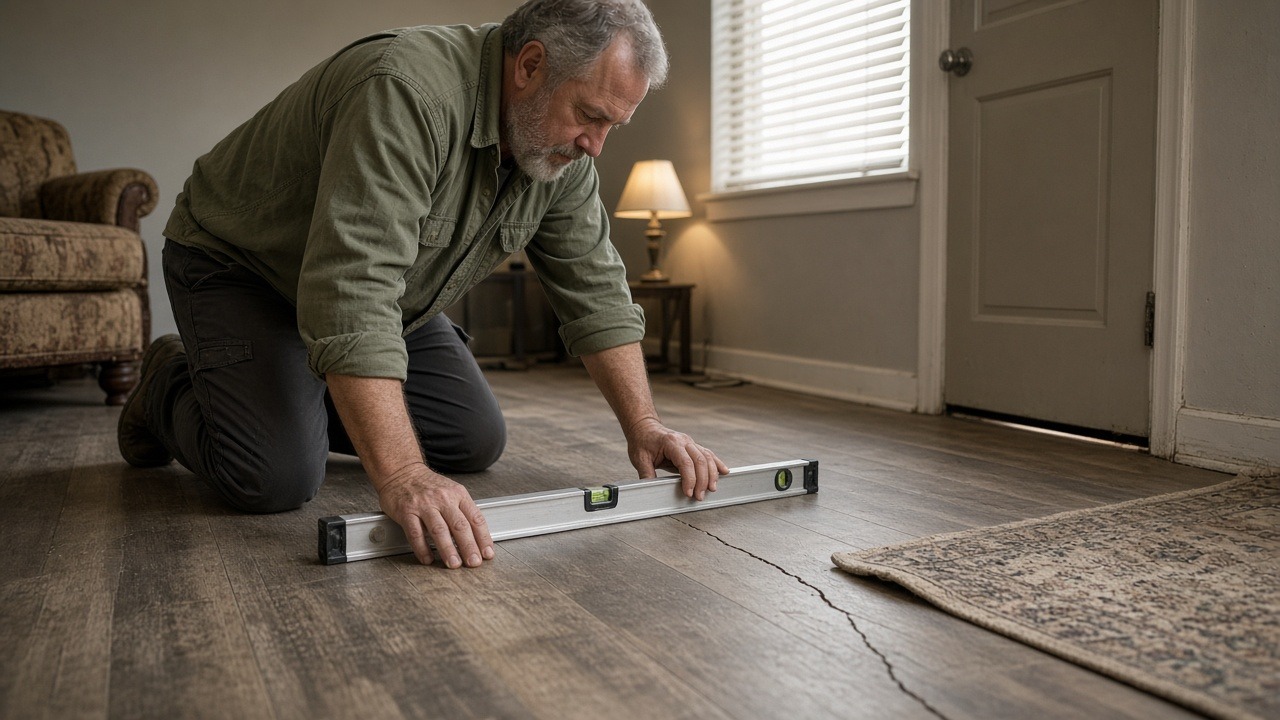
Checking a cracked floor with a level, a common warning sign homeowners notice in Crowley.
Sticking interior or exterior doors
Door frames twist out of square as the slab flexes beneath load-bearing walls.
Stair-step veneer cracks
Exterior brick or stone joints shear in a telltale zig-zag pattern along mortar lines.
Diagonal drywall cracks from corners
Stress radiates at roughly 45-degree angles from window headers and door frames.
Window frames pulling from masonry
Caulk separates and daylight or drafts appear where lintels pull away.
Baseboard and crown molding gaps
Interior trim separates from hardwood or sheetrock when floors deflect.
Cracked or tented floor tile
Rigid ceramic or porcelain tile snaps across grout lines under slab tension.
A floor slope you can feel
A noticeable grade change when walking, or toys rolling across level rooms.
Soil pulling away from the slab edge
A distinct gap opening along the perimeter beam during July and August drought.
Garage-slab cracks widening seasonally
Hairlines in unfinished garage slabs expanding noticeably over summer and winter.
What Kinds of Foundation Repair Do Crowley Homes Need?
Most Crowley homes are slab-on-grade, so the most common fix is installing piers under the slab and lifting it back toward level. Older raised-floor homes need pier and beam work in the crawlspace instead. Many jobs start with a leveling inspection, and many end with drainage corrections so the clay stays more evenly moist.
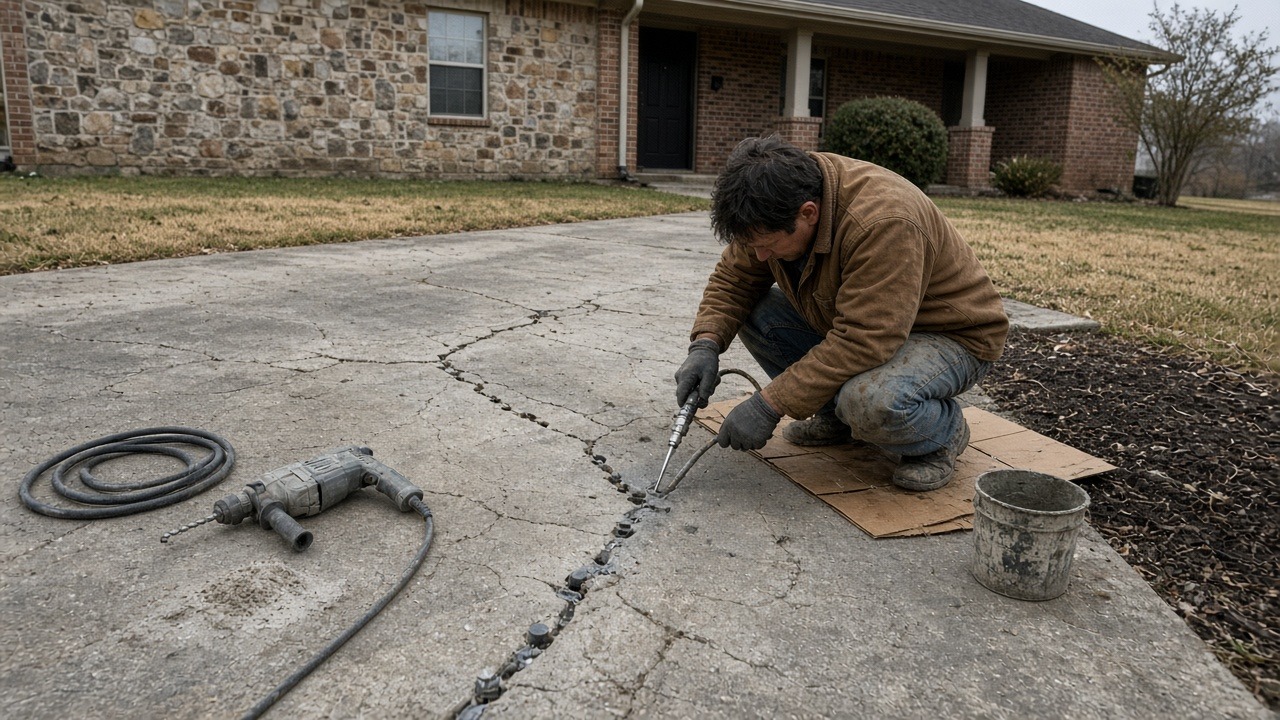
Slab Foundation Repair
Underpinning concrete perimeter beams with pressed concrete or steel piers to stabilize homes against expansive Sanger clay movement.
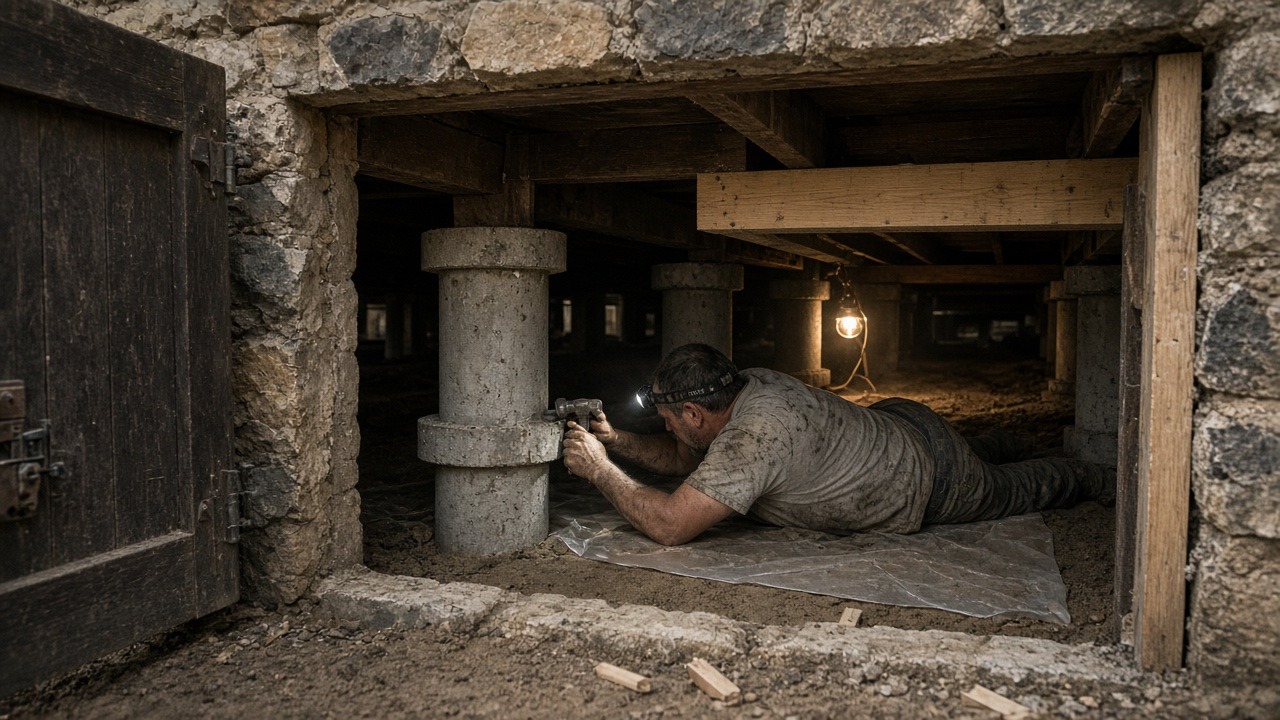
Pier & Beam Repair
Sub-floor crawlspace leveling, wood sill and beam stabilization, pad adjustments, and moisture mitigation for older and rural-edge homes.
Foundation Leveling & Inspection
Precise relative elevation surveys with digital manometers, crack mapping, and drainage reviews before committing to structural repairs.
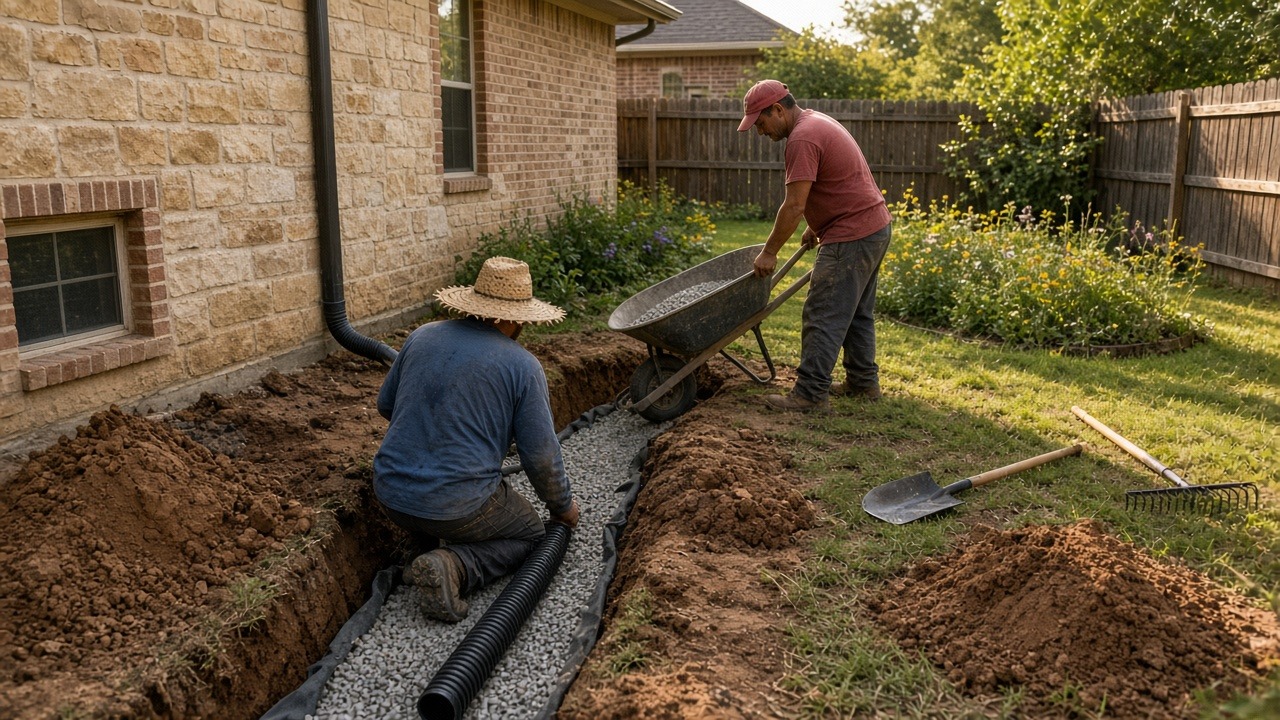
Drainage & French Drains
Perforated pipe, gravel trenches, and downspout extensions that intercept surface runoff before it saturates clay around your perimeter beam.
Where Do We Work Around Crowley?
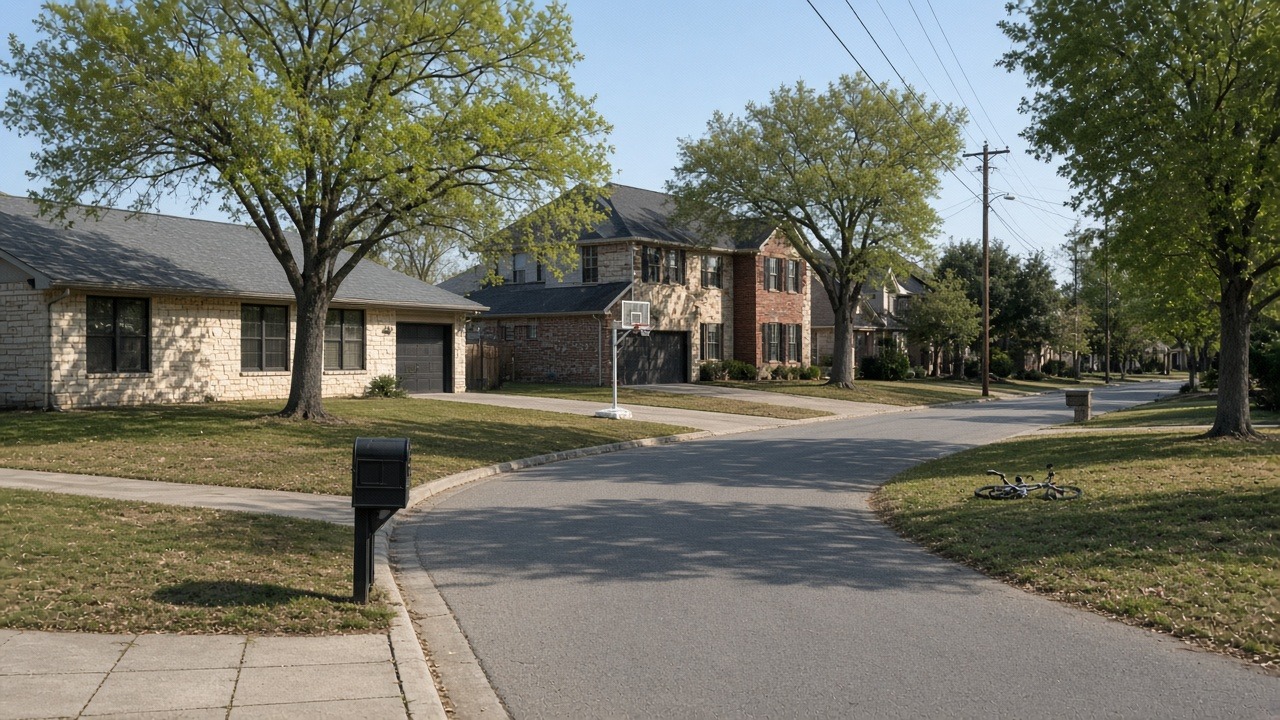
Within Crowley, we work across established neighborhoods and newer developments alike. That includes Deer Creek and the Bridges of Deer Creek, Crescent Springs Ranch, Lasater Ranch, Mayfair, Longhorn Crossing, and the newer master-planned Hunters Ridge community situated near FM 1187, I-35W, and the Chisholm Trail Parkway.
We also regularly evaluate homes near the historic crossroads of FM 1187 and FM 731 (Crowley Road), where mid-century construction sits on un-engineered clay subgrades alongside the railroad corridor.
What Happens When You Call About Your Foundation?
From your first phone call, the process is straightforward: we discuss what you're seeing, perform an on-site walk-around with elevation readings, and outline a clear written plan. For structural repairs, an evaluation by an independent Texas-licensed professional engineer is always recommended under ASCE Texas Section guidelines.
Call and describe it
Tell us which doors stick, where cracks run, and how long you've noticed them.
Walk-around & readings
We check the exterior perimeter, sight brick friezes, and record relative floor elevation readings.
A written plan
We provide estimated pier locations, depths, and recommend an ASCE Texas Section licensed engineer review.
Repair & maintenance
Piers are driven and locked; then we discuss gutter extensions and a seasonal soaker-hose watering routine.
How Do You Protect a Crowley Foundation Season by Season?
Maintaining consistent moisture in expansive Crowley clay protects against drastic shrinking and swelling. Follow local watering rules in summer, photograph baseline cracks in dry autumn, clear drainage in winter, and verify positive slope away from exterior walls every spring.
Perimeter Soaker Watering
Water evenly with a soaker hose 12 to 18 inches from the foundation during prolonged dry spells, complying strictly with current city watering restrictions.
Photograph Baseline Cracks
Take dated photos of brick veneer cracks and interior drywall while the clay subgrade is at its driest, creating a baseline for the coming spring.
Clean Gutters & Extend Spouts
Clear oak leaves from gutters and extend downspouts at least 5 feet away from the slab so cold-season deluges don't pond along the perimeter beam.
Regrade Flower Beds
Check landscape beds to ensure topsoil and mulch haven't piled above the brick line or reversed grade back toward the concrete foundation.
"A crack is a symptom. The soil is the cause, so a good repair plan always talks about both."
How Much Does Foundation Repair Cost in Crowley, TX?
Most foundation repair jobs around Crowley fall roughly between $4,000 and $12,000. A typical slab repair with 8 to 12 pressed concrete piers often lands in the middle of that range. Inspections and drainage work usually cost less, while steel piers, interior piers or whole-house lifts can cost more. Every figure here is an estimate, not a quote.
Estimates only, based on typical Dallas–Fort Worth ranges. Your price depends on an on-site evaluation.
What moves the price on a Crowley foundation?
Does Homeowners Insurance Cover Foundation Repair in Texas?
Usually not for ordinary movement. Standard Texas homeowners policies generally exclude settling, cracking, shrinking or expansion of foundations. Coverage can apply when foundation damage is caused by a sudden plumbing leak and the policy includes a foundation endorsement, which typically carries its own limit. Check your declarations page and ask your agent before you assume either way.
Practical steps if you suspect foundation movement
- Photograph and date the cracks: Record interior drywall lines and exterior brick mortar separations with a coin or ruler for scale.
- Get a plumbing leak test if a slab leak is suspected: If a sudden crack follows high water bills or warm spots on floors, a hydrostatic test can determine if plumbing caused the clay movement.
- Keep every inspection report: Retain elevation readings, soil documentation, and engineer summaries for future reference or home sales.
- Call your insurance agent before making permanent repairs: Verify whether your specific policy includes a foundation water-damage endorsement and understand its deductibles and caps.
Note: We do not process or negotiate insurance claims. Policy coverage is determined solely by your insurer according to your declarations page.
Foundation Repair in Crowley, TX: Common Questions
Most foundation repair jobs around Crowley fall roughly between $4,000 and $12,000. A typical slab repair with 8 to 12 pressed concrete piers often lands in the middle of that range. Inspections and drainage work usually cost less, while steel piers, interior piers or whole-house lifts can cost more. Every figure here is an estimate, not a quote.
Cracks back after a dry summer? Let's take a look.
Hours: Call for availability